
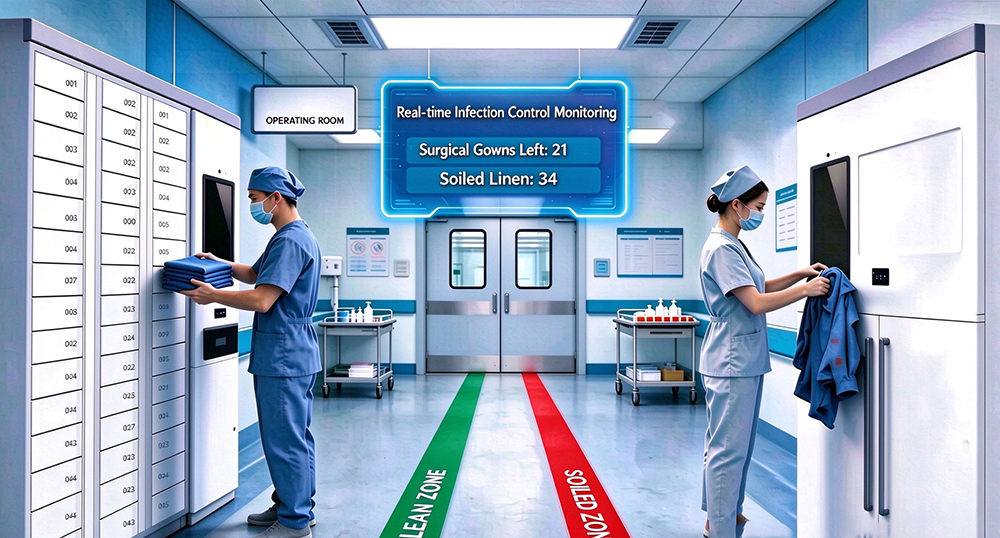
Recently, Nanjing JuYun Intelligence deployed a complete closed-loop smart operating room behavior management system for the operating rooms across three buildings of a hospital in Nanjing. Centered around "smart dispensing cabinets," "smart recycling cabinets," and a "comprehensive management platform," the system is based on IoT and internet technologies, achieving digital and refined management of operating room clothing and personnel behavior standards, significantly improving operational efficiency compared to traditional management models.
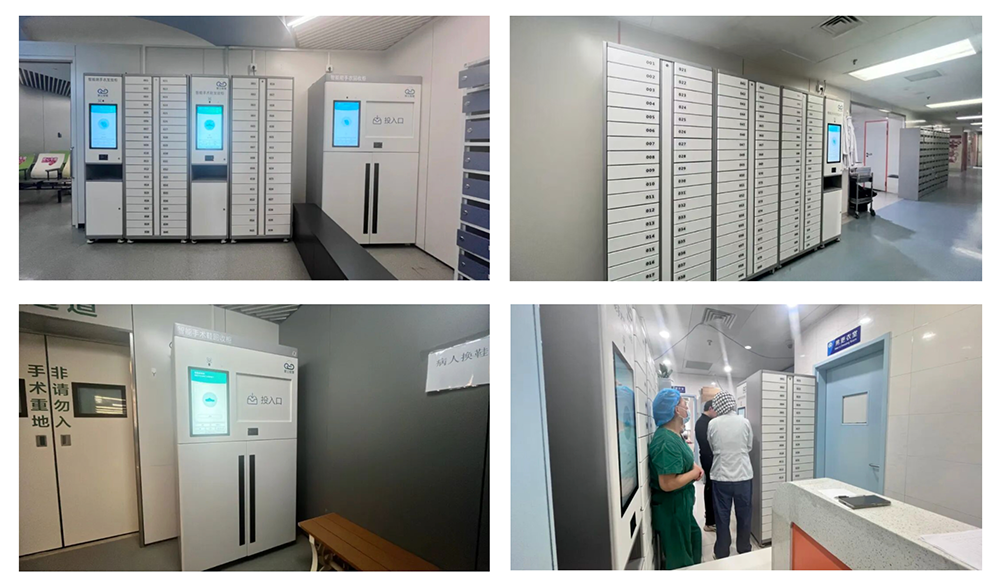
After the Intelligent Upgrade of the Operating Room
I. Solving Two Core Challenges: Finding Clothes and Tracking
During the special research conducted before the project launch, the hospital management department found that traditional operating room behavior management had two major objective difficulties, which affected operational efficiency and the integrity of the infection control closed loop:
Limited dispensing efficiency, making it difficult to allocate materials accurately in real time: During peak hours, queues easily formed in front of manual dispensing counters. Due to the lack of real-time data support, scrub suits of certain sizes were sometimes in short supply, while other sizes circulated relatively slowly, leaving room for improvement in material utilization efficiency.
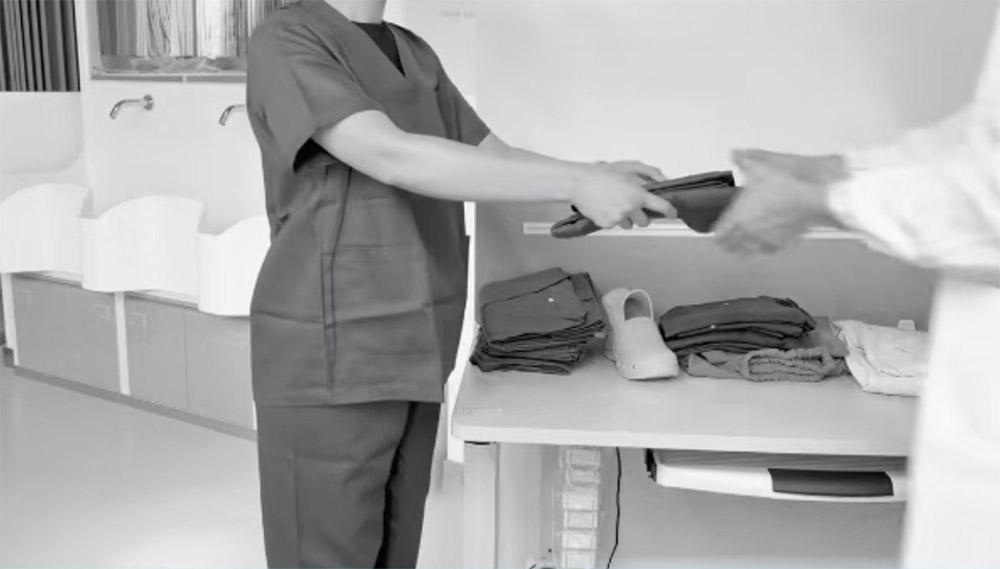
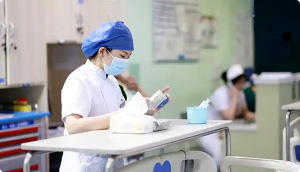
Manual dispensing of scrub suits and surgical shoes
Clothing flow is difficult to track, and the management closed loop needs improvement: Under the traditional management model, the pickup and return of scrub suits/shoes do not have the function of automatically binding personnel information, which cannot meet the needs of infection control traceability. It is also difficult to accurately grasp the loss of some clothing items, affecting the level of refined asset management.
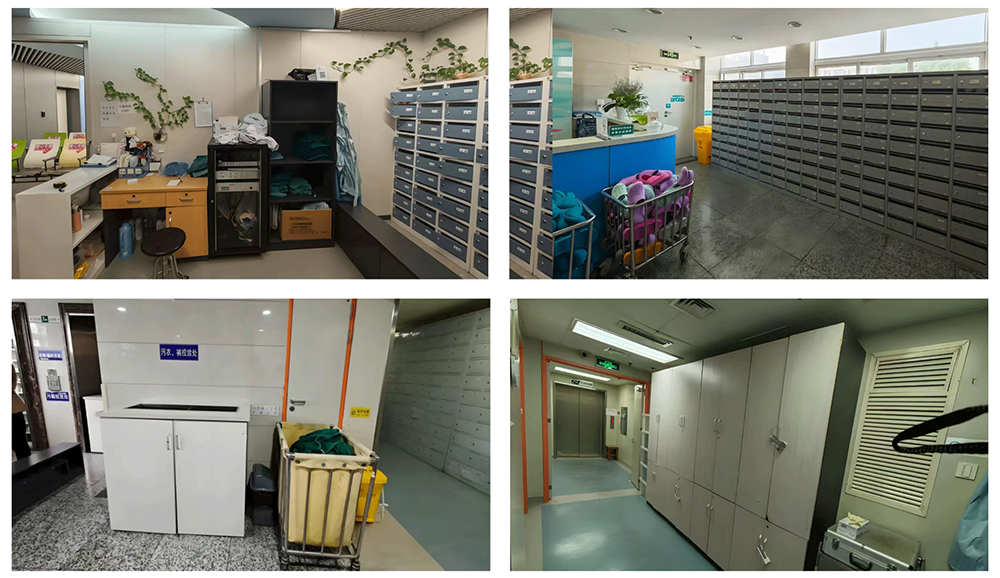
The Status Quo Before the Operating Room Upgrade
In response to these actual conditions, the hospital decided to carry out reform from the source, using "IoT + Internet" technology to upgrade from "passive management" to "proactive service."
II. Scenario Re-engineering: An "Unattended" Front Desk
The core design of this system has always revolved around the two major principles of "people-oriented" and "clean and contaminated separation," reconstructing the entire process of picking up and returning clothing in the operating room to create a more efficient and standardized management scenario:
· Zero-second response, precise dispensing: When medical staff step into the entrance of the clean area of the operating room, they only need to complete face recognition or IC card verification at the smart cabinet screen. The system backend instantly completes identity verification and, based on their preset size, automatically opens the cabinet door. Inside is a complete set of clean, perfectly fitting scrub suits/shoes.
· Sensorless return, automatic counting: After the surgery is completed, medical staff only need to deposit the used scrub suits and surgical shoes into the designated "soiled item recycling ports." The built-in Radio Frequency Identification (RFID) technology in the recycling ports can instantly read the information of the chips embedded in the clothing, achieving "return upon deposit." No manual counting or registration is required, significantly reducing the extra workload for medical staff.
If the smart cabinets at the front end solve the efficiency issues of "picking up" and "returning," then the accompanying management platform makes every medical staff member a "participant" and "beneficiary" of operating room material management.
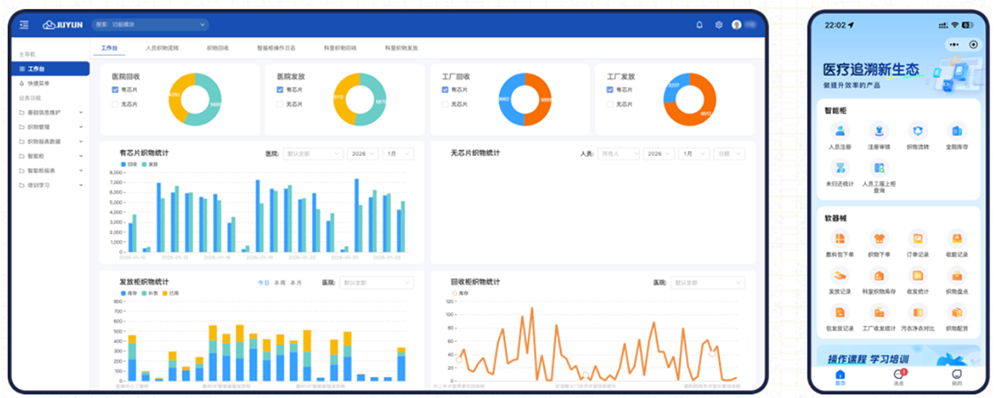
Medical Staff Management Platform (或 Staff-Facing Management Platform)
· Real-time Inventory Visibility: Medical staff can check the real-time inventory of scrub suits and surgical shoes in various sizes within the operating room at any time.
· Full-process Traceability: Administrators can view the overall department's inventory dynamics and conduct full lifecycle traceability for every RFID-chip-embedded garment. They can clearly grasp the pickup, return, and washing records, providing a precise basis for asset inventory and cost accounting.
III. Initial Results: Upgraded Operating Room Order and Infection Control
Since the system was launched in the hospital, initial results have gradually emerged:
· Refined Management: It has achieved full-process digital tracking of surgical personnel behavior and material consumption. The management approach has shifted from experience-driven to data-driven, greatly improving management precision.
· Standardized Infection Control: Strict clean-contaminated separation channels and behavior standards have been established, effectively cutting off cross-infection pathways caused by dress-related issues and adding a solid "firewall" for surgical safety.
· Cost Savings: The loss rate and abnormal wear-and-tear rate of clothing have dropped significantly. The hospital's asset management capability for surgical materials has been notably enhanced, achieving effective savings in operating costs.
The construction of a smart hospital lies not only in the introduction of high-end medical equipment, but also in the optimization and upgrade of every management detail. Nanjing First Hospital has introduced the Juyun Smart Operating Room Intelligent Behavior Management System, allowing data to do more of the legwork and sparing medical staff from unnecessary hassle. This not only reduces the non-clinical burden on medical staff but also builds a safer and more efficient operating room environment—and the ultimate beneficiaries of all this are every single patient.