

On-site inspections rarely start in the conference room.
Most of the time, the first stop is the changing room. The inspector walks in, picks a sterile garment off the rack, turns it over to check the label, and starts asking questions.
Seven questions.
Not one of those seven questions was about a system, a protocol, or a platform. They all pointed to the same thing — can you account for this garment?
Q1. How many times has this garment been washed?
· On site: Cumulative wash count is almost always the first number asked for.
· Where it breaks down: Wash records are batch-level — 30 garments washed in one load. To report the count for "this one garment," you have to back-calculate from batch-level records, and manual back-calculation will always have discrepancies.
→ One code per item: each wash is added to the garment's record in real time; the upper limit is set per model based on cleanroom garment performance validation conclusions, with automatic alerts at the threshold.
Q2. How many times has it been sterilized? Which sterilizer was used, what were the actual sterilization parameters, and when does it expire?
· On site: Several questions asked in quick succession, with no time to look up documents in between.
· Where it breaks down: Sterilization records are equipment records; cleanroom garment files are material records. Two sets of records from two systems and two teams — they can only be cross-checked manually.
→ Sterilization batch, temperature, and expiry date are written into the same garment's file — not split across two places.
Q3. Who wore it? Where was it collected from?
· On site: The logbook on the changing room wall.
· Where it breaks down: People move around; paper can't stop someone from "just grabbing one." Missed entries, back-filled entries, and proxy signatures are impossible to detect after the fact.
→ Face-recognition access: unauthorized personnel can't take one; the taker, time, and quantity are generated by the device, not filled in by hand.
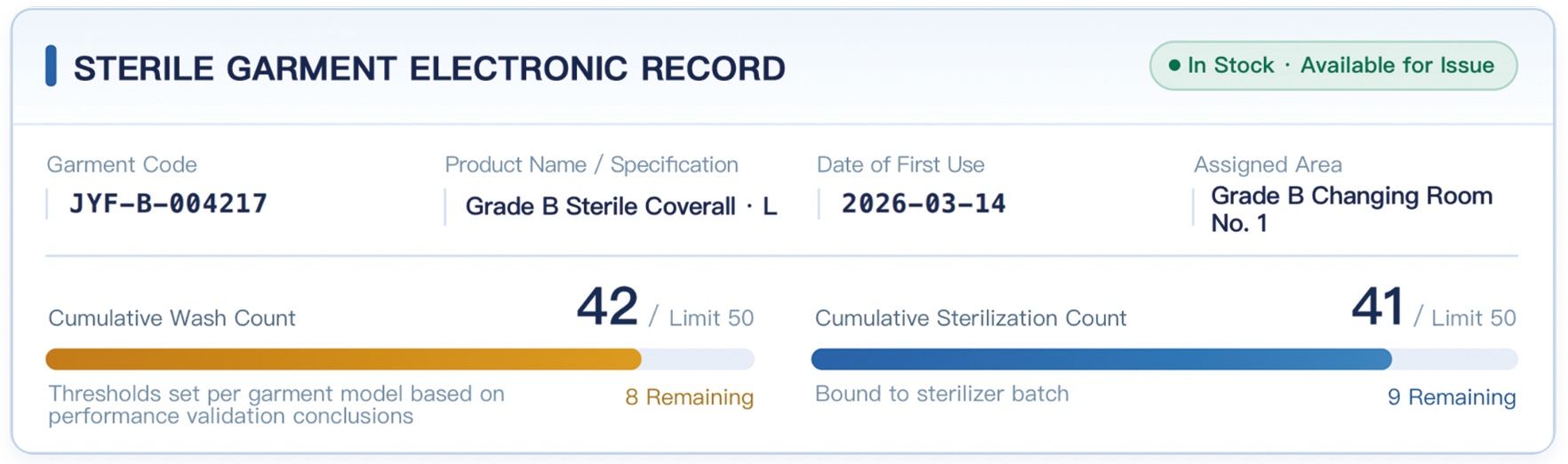
The answers to Q1–Q3 all end up on the same page
Q4. How do you prevent use of garments whose sterilization has expired?
· Where it breaks down: Expired items and normal items can't be distinguished by eye; tags, human memory, and self-discipline can't stop it.
→ Automatic alert and scrapping at the threshold; for items not yet scrapped, the cabinet door won't open.
Q5. Can wash parameters be traced to a specific sterilization batch?
· Where it breaks down: The machine has records; the garment doesn't. GMP requires "what this garment went through."
→ Parameters, equipment ID, and batch are recorded with each action and bound to the item.
Q6. How is cross-contamination prevented during soiled garment collection?
· Where it breaks down: The process is fine; execution is where it fails — nobody watches the soiled garments sitting in the corridor for half an hour waiting for the cart.
→ Sealed collection cabinet with built-in UV disinfection, automatic counting, and full-bin alarms.
Q7. Who entered the data, and can it be modified?
· Where it breaks down: Anyone can edit Excel sheets and paper logs. However well the previous questions were answered, this one question overturns everything.
→ Role-based tiered authorization, independent audit trails for key operations, data cannot be deleted or modified.
These 7 questions are actually a single chain:
Item → Batch → Person → Scrapping → Parameters → Collection → Data.
If even one link is handwritten, the whole chain breaks there.
What this system looks like
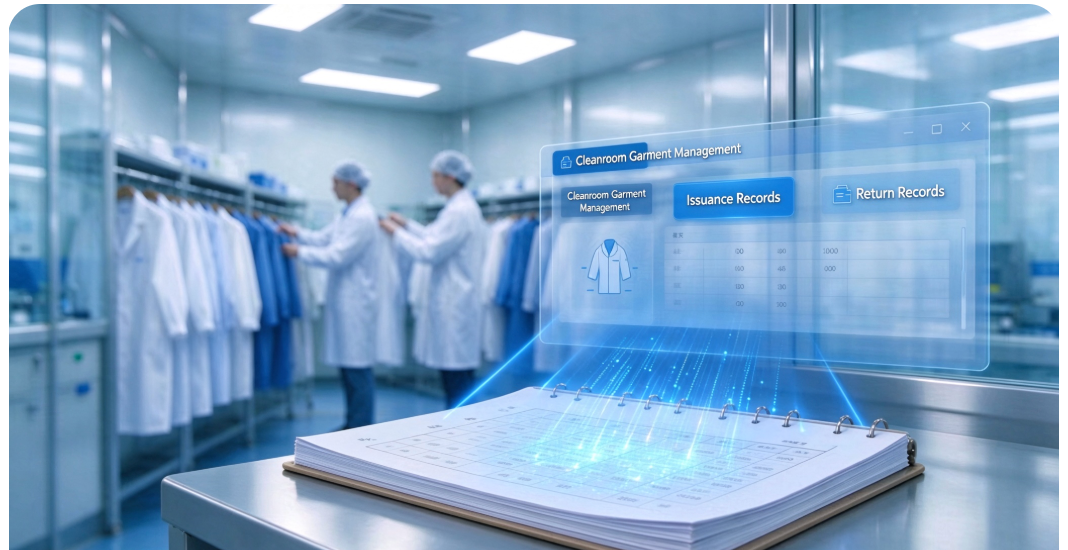
In one sentence: give every cleanroom garment a code, and let all of its history be recorded automatically under its own name. People only need to wear and return it; the device handles the records.
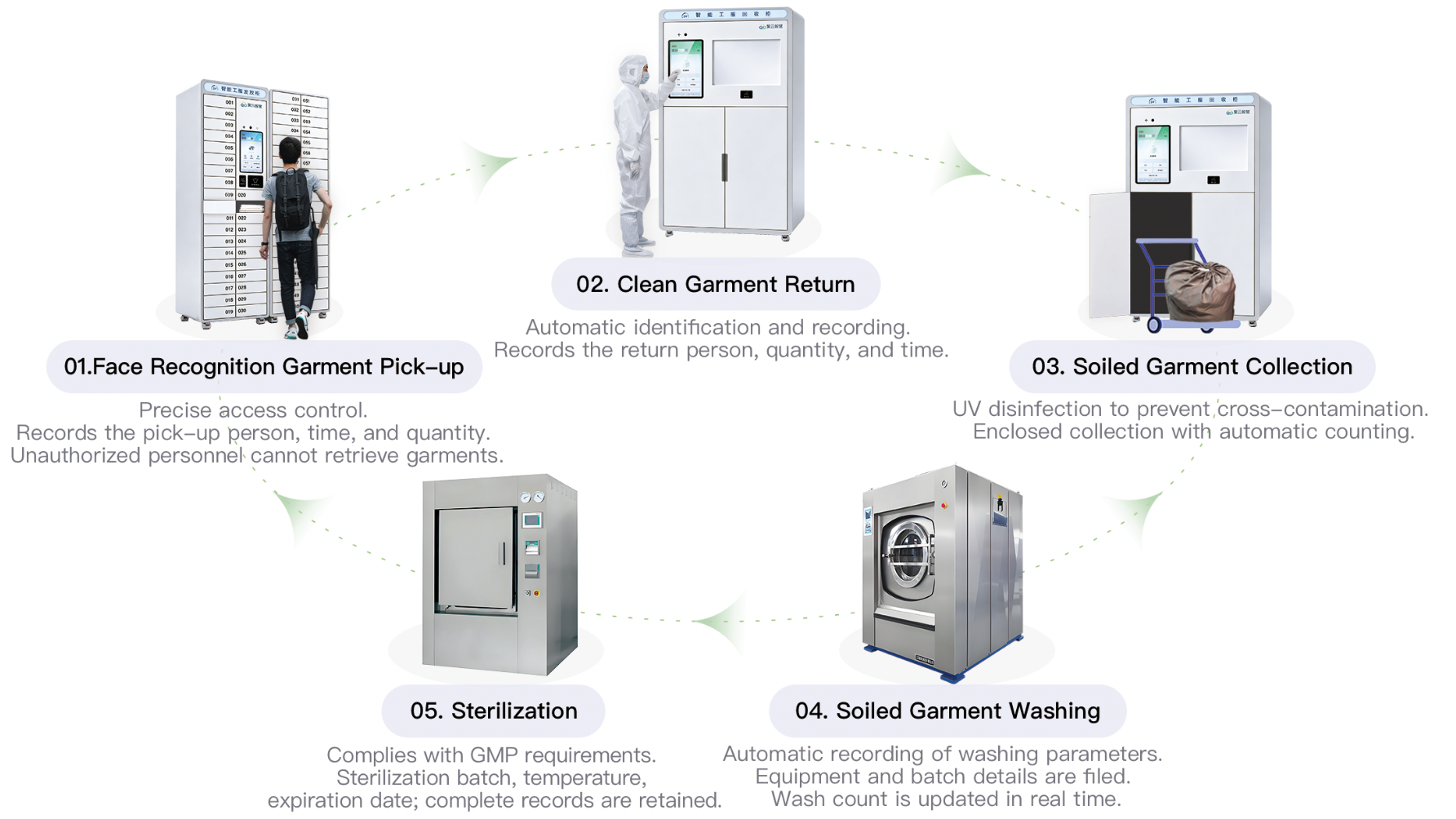
Full life-cycle closed-loop traceability
Face-scan pickup of cleanroom garments, automatic identification on return, automatic counting in the collection cabinet, wash parameters archived by batch, sterilization records bound to the same item. Five steps, and a garment's complete history emerges.
No manual back-filling — data is generated by actions themselves. People can forget to log; devices don't.
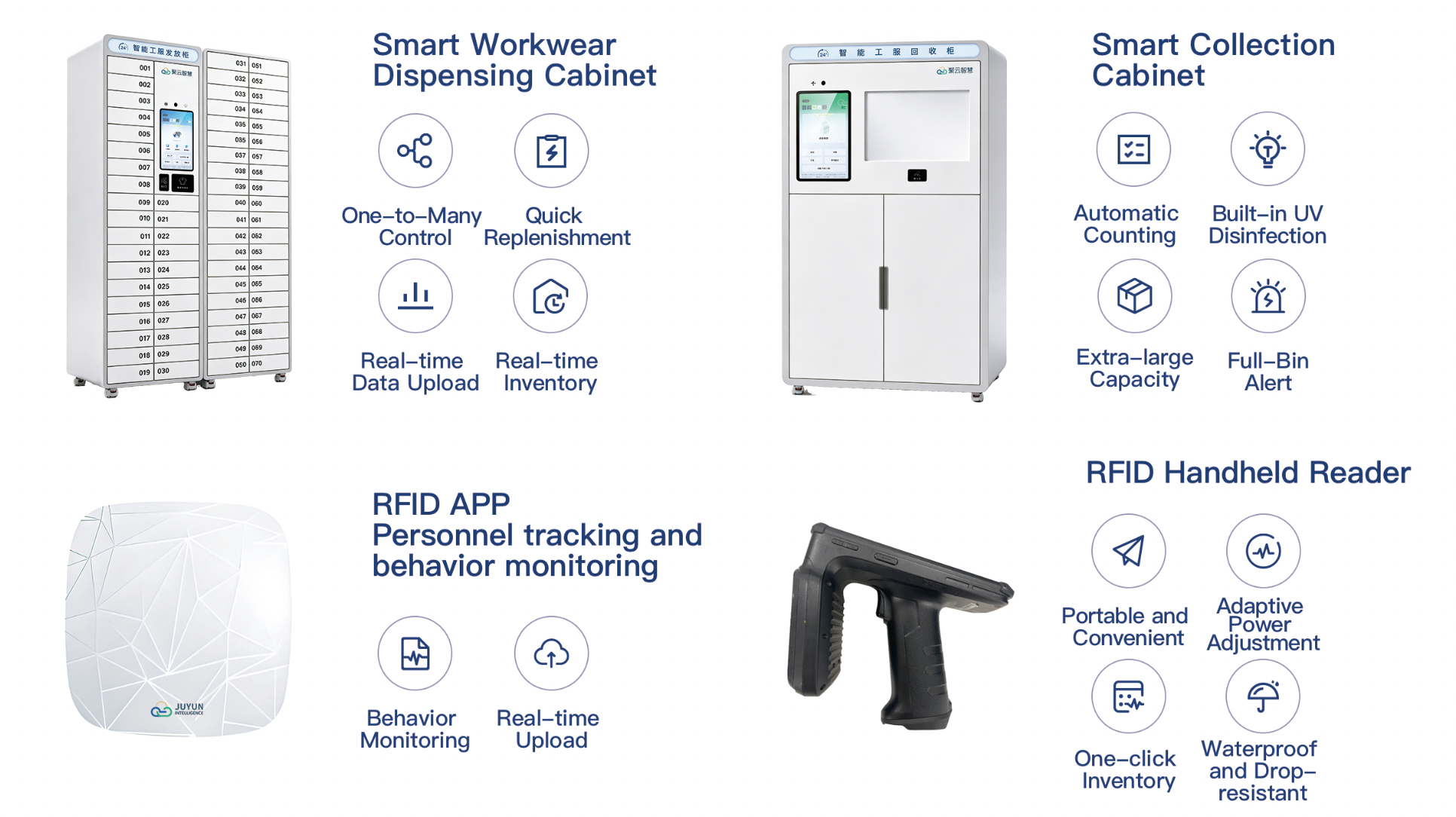
Hardware-capable devices
Application scenarios
Focused on the pharmaceutical field, meeting stringent compliance requirements.
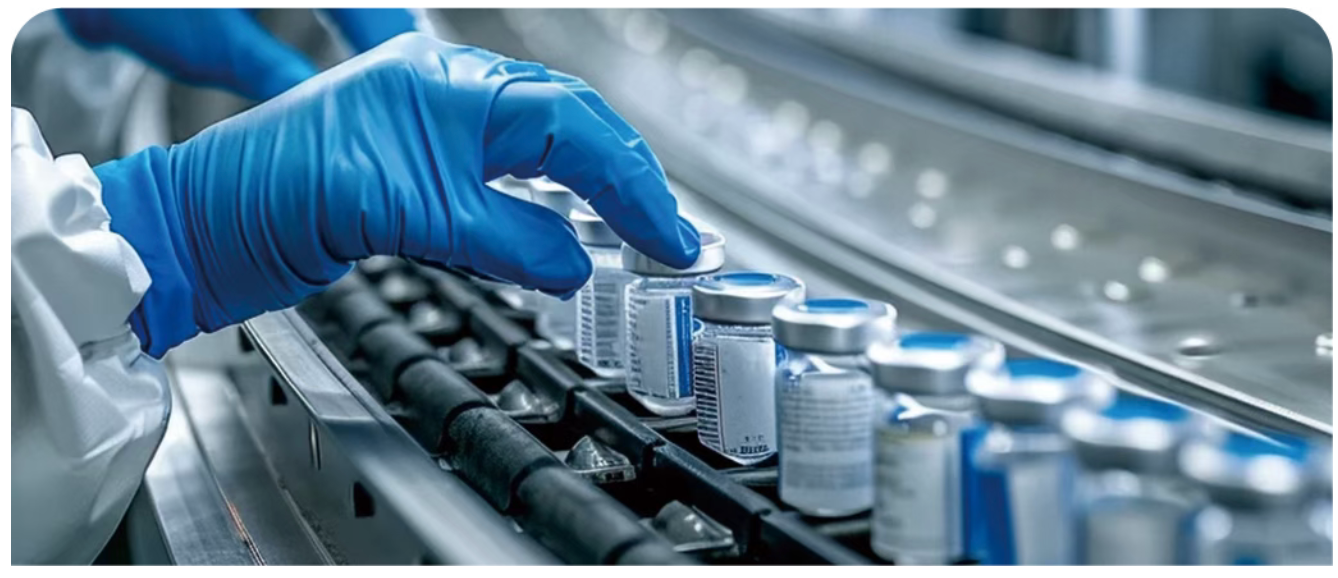
Aseptic pharmaceuticals
Grade A/B sterile garments, Grade C/D cleanroom garments — for injection, sterile API, lyophilized preparation, aseptic filling and other workshops and changing rooms.

Bioengineering
Vaccine, monoclonal antibody, cell and gene therapy and other biologics workshops; the same coding rules cover multiple cleanroom grades.
#SterileGarments #PharmaGMP #CleanroomGarmentManagement #UnannouncedInspection #SmartTraceabilityManagement