

【Project Background】
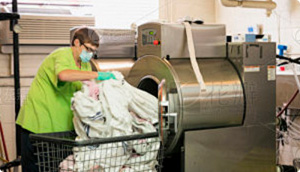
For a long time, the dispensing, collection, and circulation of medical staff uniforms in medical institutions have mainly relied on manual operations, generally facing three major pain points:
· Severe queuing during shift change peak hours, occupying valuable time of medical staff;
· Lack of effective isolation between soiled and clean uniforms during circulation, posing infection risks;
· Frequent occurrences of uniform loss and discrepancies between accounts and physical items, making management and traceability difficult.
Based on the above issues, smart uniform dispensing and recycling cabinets have been deployed across four hospital campuses in Beijing to explore a feasible path for transforming uniform management from manual operations to intelligent operations.
I. Overview of the Participating Campuses
The four participating campuses belong to two large tertiary Grade-A hospitals. They operate independently and are geographically dispersed. The specific details are as follows:
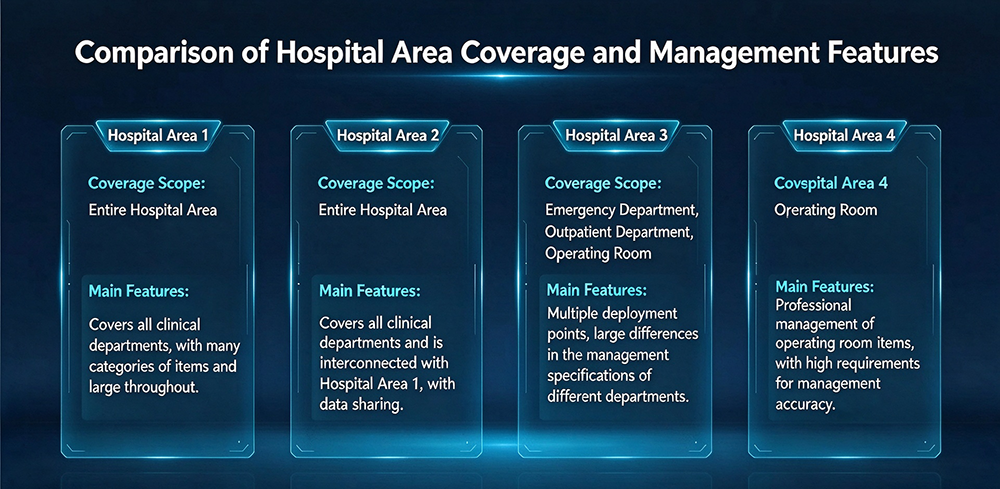
Note: Campus 1 and Campus 2, as well as Campus 3 and Campus 4, belong to different campuses of two hospitals respectively. The system enables data interoperability, but management rules can be independently configured for each campus.
II. Implementation of the RFID Smart Uniform Management Solution
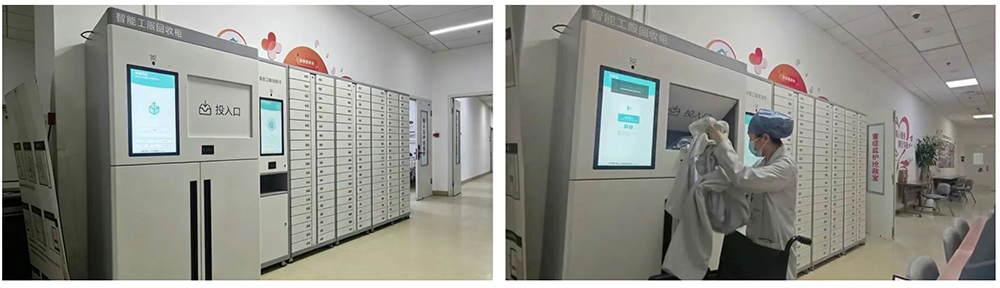
The core process of the smart uniform management system revolves around two stages: "dispensing" and "recycling."
1. Dispensing Stage: After medical staff verify their identity, the system automatically matches the uniform size and dispenses a clean uniform. The backend synchronously records the transaction and deducts the inventory, completing the entire process via self-service.
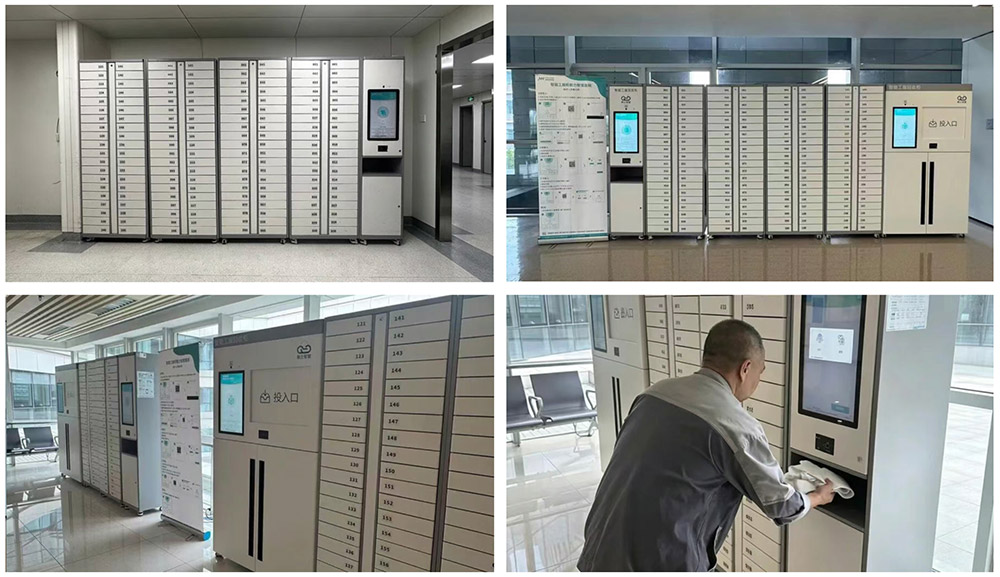
2. Recycling Stage: Medical staff deposit soiled uniforms into the recycling cabinet. The system instantly records the return information and synchronizes the data to the backend.
3. Intelligent Inventory Management:
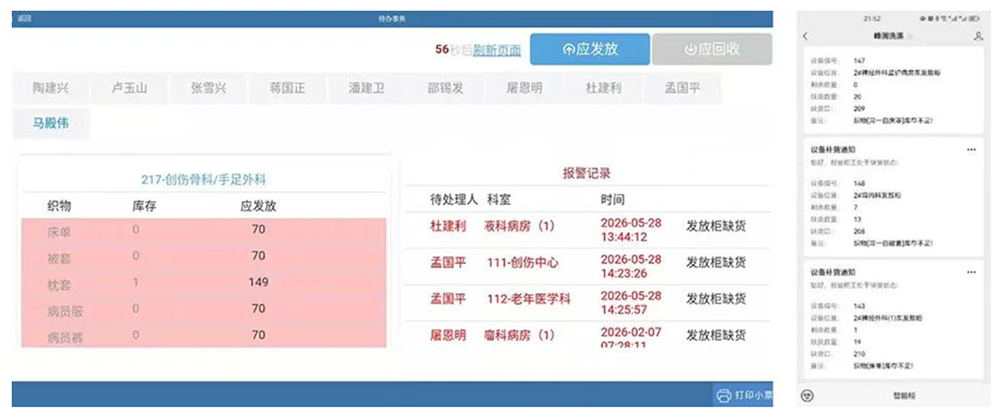
· Real-time synchronization of inventory data, with automatic alerts supported when thresholds are reached;
· Head nurses can check the inventory status of each department with one click via the APP, eliminating the need for on-site counting;
· Medical laundry staff automatically replenish stock based on system prompts, loading clean uniforms directly into the dispensing cabinets, so medical staff no longer need to wait on-site for handovers.
4. Full-Process Closed-Loop Traceability:
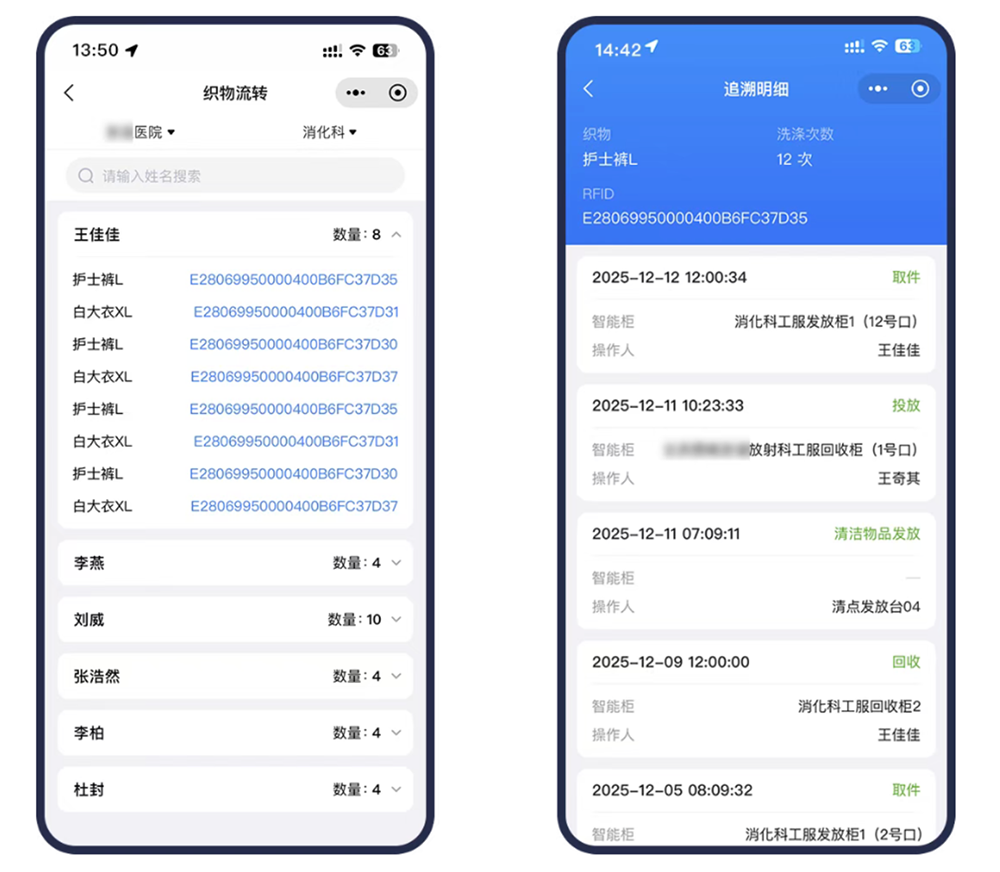
· Connecting full-chain data for "in-hospital use + off-site washing," forming a complete traceability system from pickup, recycling, transport, and washing to disinfection and scrapping;
· When an infection control event occurs, the full-process records of the textiles can be retrieved with one click to quickly complete epidemiological traceability, providing precise data support for hospital infection prevention and control.
【Core Business Rules】
Implement a "trade-in" mechanism: New uniforms can only be claimed after returning the old ones, systematically preventing "dispensing without return."
Support 24/7 operation to meet uniform-changing needs during special periods such as night shifts, emergencies, and holidays.
Management rules can be set independently for each campus. Different campuses of the same hospital support data interoperability but can also operate independently.
Uniform lifecycle management: Each uniform is bound to a unique RFID chip. The system automatically records the number of uses and washing cycles, automatically issuing early warnings for scrapping and replacement when they expire, preventing use beyond their service life.
III. Implementation Results
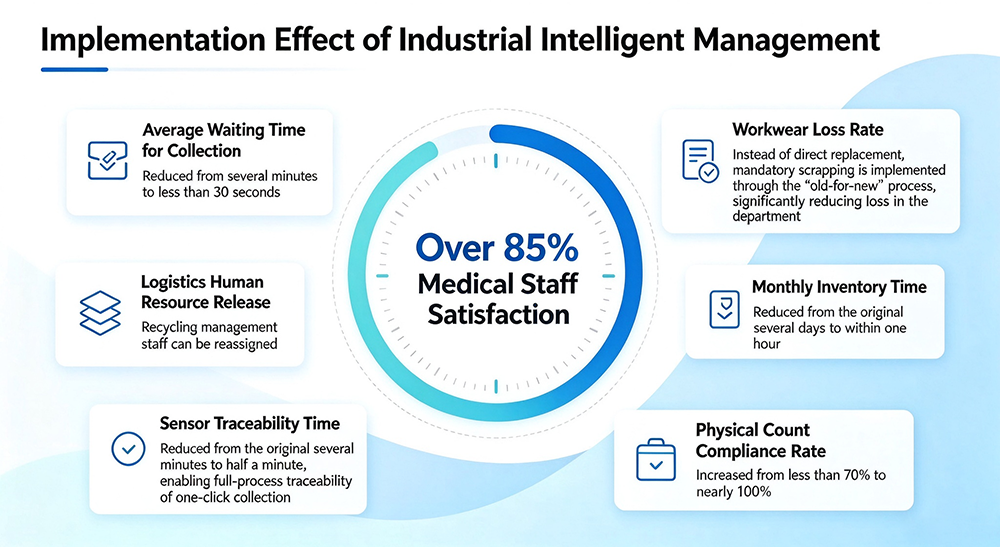
After the system was launched and put into operation, all four campuses achieved significant improvements in the efficiency and quality of uniform management:
IV. Experience Summary
The practices at the four campuses demonstrate that smart uniform management terminals have good applicability across different types and sizes of hospital campuses:
· Both hospital-wide coverage and department-level deployment can be effectively implemented, and the system can adapt to management needs across different scopes;
· Different campuses of the same hospital can achieve both data interoperability and independent operation, facilitating overall coordination;
· Implementing a "trade-in" policy is key to reducing losses, proving more effective than mere reminders or suggestions;
· Multiple verification methods running in parallel respect users' freedom of choice and help increase acceptance.
· Connecting full-chain data both inside and outside the hospital to achieve full lifecycle traceability of textiles is the core value of intelligent management compared to traditional models.
Project Conclusion
The value of smart uniform management terminals lies in effectively solving real problems in uniform management—saving medical staff from queuing, sparing logistics staff from extra overtime, and making every uniform traceable. The successful practices at four campuses of two hospitals provide a valuable reference model for refined and intelligent management in medical logistics.
Nanjing Juyun Smart Information Technology Co., Ltd. focuses on implementing hospital-wide RFID medical textile intelligent closed-loop management systems. With IoT smart hardware and a digital management platform, it connects the entire lifecycle of textiles—from procurement, warehousing, dispensing, and use to recycling, washing, and scrapping—providing medical institutions with efficient, precise, and traceable full-lifecycle textile management solutions.
#SmartHospitalLogistics #MedicalTextileManagement #RFIDTechnologyApplication #InfectionControlCompliance #SmartHospital #RefinedHospitalLogistics