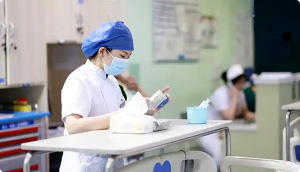

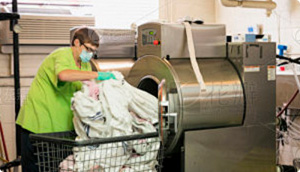
Problems in Hospital Linen Management: Currently, hospitals still manage linens such as bed sheets, duvet covers, and patient gowns mainly through manual operations. There is a lack of effective management tools in processes such as warehousing, washing, and distribution, with heavy reliance on manual intervention and handwritten records. This gives rise to the following problems:
1. Difficult process traceability
Inability to effectively monitor whether linens have undergone standardized washing procedures;
Lack of full lifecycle management tools;
2. Persistently high loss rates
Handover stage: Linens are lost due to missing records;
Washing stage: Unable to track washing frequency, making it difficult to assess service life;
3. Efficiency and nosocomial infection risks
Manual counting consumes a large amount of manpower;
The handover process does not meet nosocomial infection requirements, posing infection risks;
These problems reflect the deficiencies of current hospital management models in informatization, standardization, and traceability, and there is an urgent need to introduce intelligent management solutions.
Solution 1: RFID Handheld Terminal Management Model
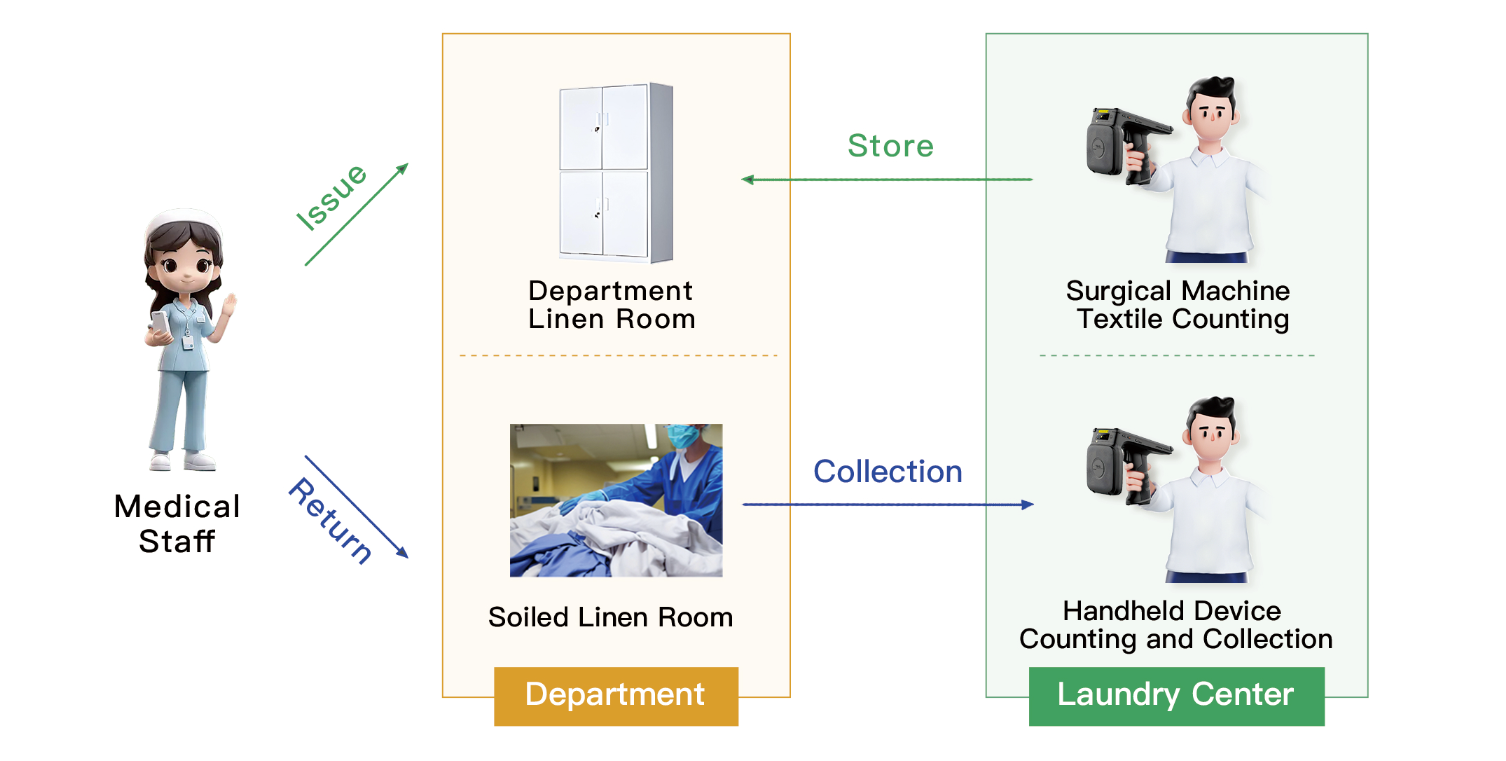
The handheld terminal counting management approach is adopted, with the main processes including:
Counting and distribution: The laundry center delivers to departments, uses handheld terminals to count fabrics, and places them in ordinary cabinets.
Pickup stage: Medical staff take items from the linen storage cabinet.
Return stage: Soiled linens are uniformly piled in designated areas.
Inventory stage: Laundry center personnel use handheld terminals for inventory counting and recycling.
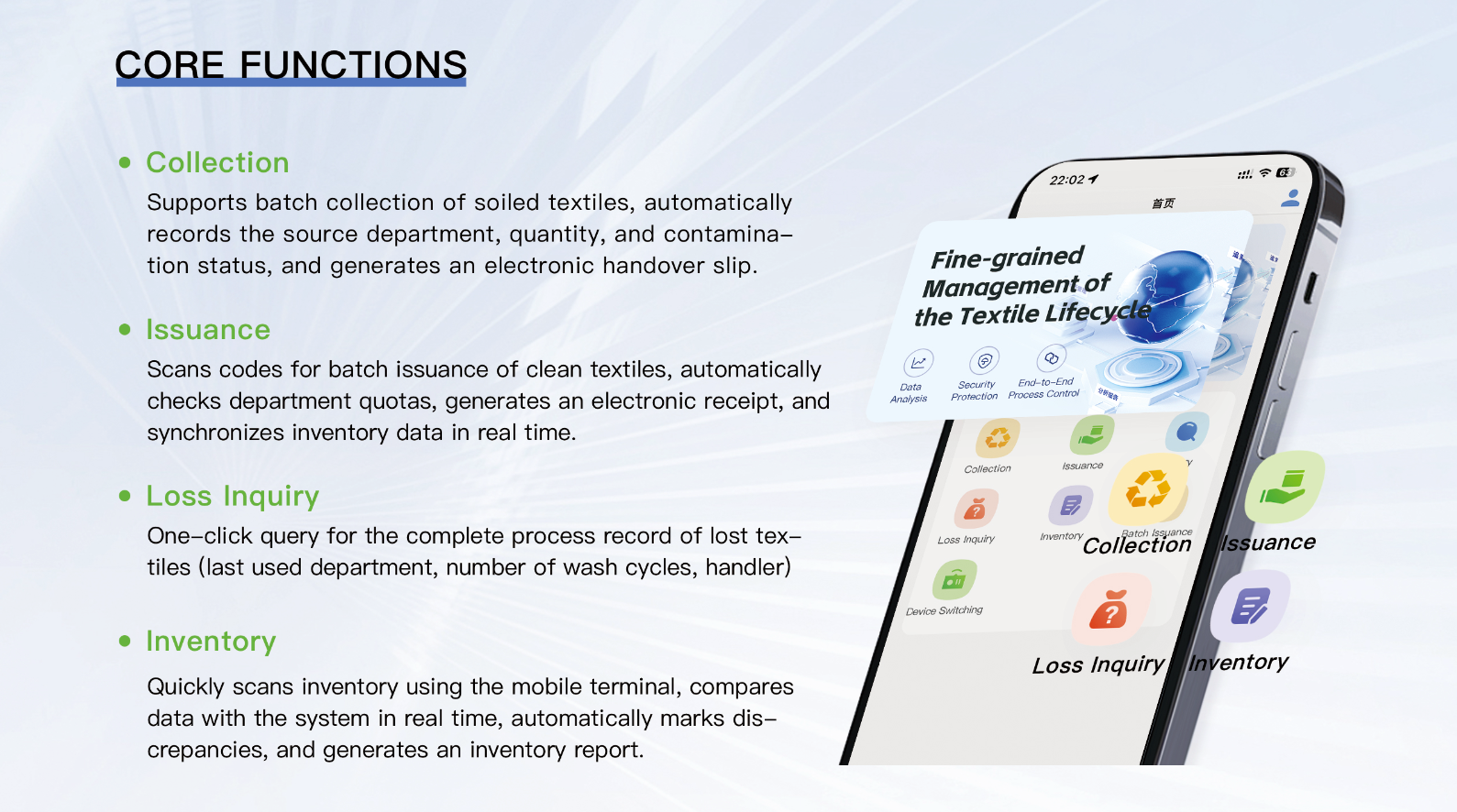
Intelligent Management System
Advantages:
Low initial investment cost (no need to configure smart cabinets);
Disadvantages:
Keys are needed to open cabinets, resulting in lower pickup efficiency;
Centralized piling of soiled linens poses hygiene and safety risks;
Solution 2: Smart Cabinet Management Model
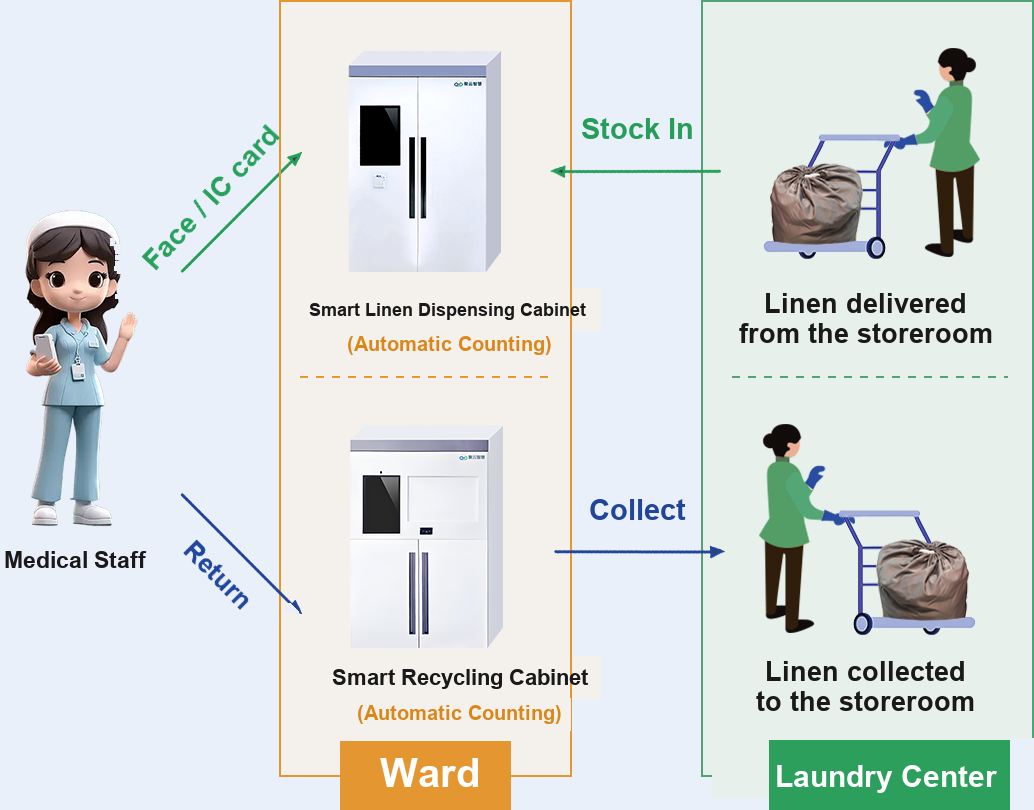
Intelligent management equipment is adopted, with the main processes including:
Pickup stage: Medical staff self-service pickup via face recognition/IC card authentication.
Return stage: Soiled linens are deposited into smart recycling cabinets for automatic counting.
Transport stage: Recycling personnel can directly transfer to the laundry center.
Advantages:
Enables unattended self-service pickup (improves pickup efficiency);
Eliminates hidden risks of soiled linen piling;
Fully automated management;
Disadvantages:
Smart cabinets need to be configured in each department;
Higher initial investment cost;
Note: The two solutions can be selected based on the hospital's actual needs and budget. Solution 2 has greater advantages in management efficiency and safety.
Core Value of Intelligent Hospital Linen Management
1. Efficiency Optimization
Achieves automation of the entire process from procurement to sorting to distribution;
Significantly reduces manual operation time and error rates;
2. Precise Management
Adopts RFID technology for automated counting;
Establishes a full-process traceability system;
Enhances management transparency;
3. Intelligent Processes
Smart devices simplify handover and counting processes;
Reduces the complexity of manual operations;
4. Cost Effectiveness
Reduces losses through process optimization;
Improves overall operational efficiency;
5. Decision Support
Automatically generates management reports;
Provides data-based decision-making references;
Meets regulatory compliance requirements.
Through technological innovation, this system provides medical institutions with an efficient, precise, and traceable modern linen management solution, comprehensively enhancing hospital logistics management.